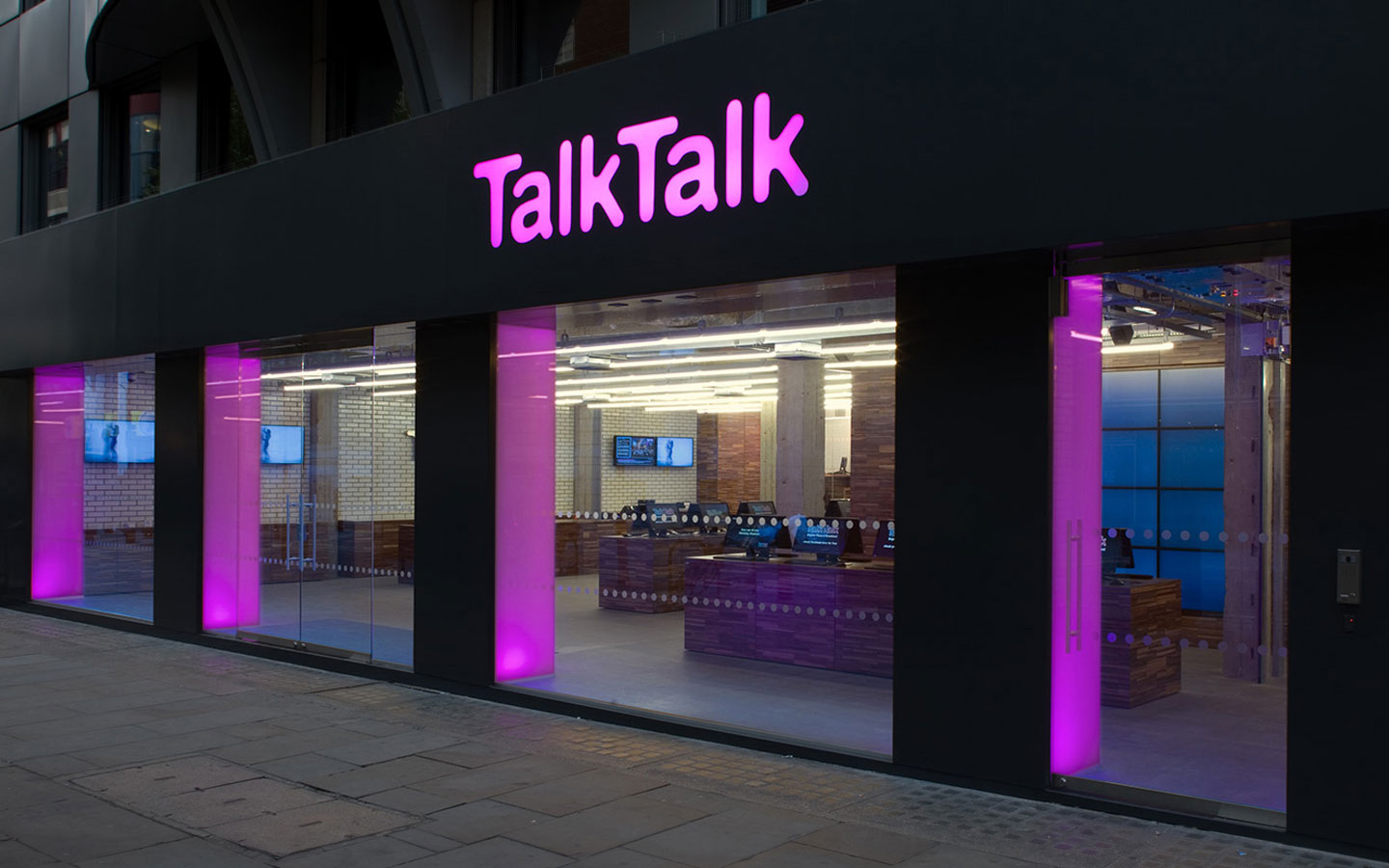
Case Study · TalkTalk Business
Building the campaign engine behind a major B2C & B2B push
TalkTalk Business wanted to run a major integrated campaign into both consumer and business segments. The brand promise was bold, the media spend was serious and the pressure on the marketing engine to perform was high. I was brought in to make sure Eloqua and Salesforce could keep up.
This case study is about the plumbing behind the posters – how we built a lead and campaign architecture capable of supporting a high-profile telecoms campaign across B2C and B2B without the wheels coming off.
Client background
TalkTalk Business is one of the UK’s fastest-growing B2B telecoms providers, offering business-grade internet access, data, voice and mobile services to over 180,000 business and public sector customers, plus a large partner network.
At the time of this project, TalkTalk were running a major integrated campaign that spanned both consumer and business audiences. The promise was simple: clearer value, simpler products and a better deal than the incumbents – but the marketing automation stack had to prove it.
At a glance
- Sector: Telecoms (B2C and B2B)
- Platforms: Oracle Eloqua, Salesforce
- Focus: Lead management & campaign architecture
- Role: Senior Eloqua Developer & Architect
The challenge
TalkTalk were preparing to go big – high visibility media, strong commercial offers and aggressive growth targets in both B2C and B2B. But the lead and campaign management setup was not ready for that level of scrutiny.
Lead management gaps
- Lead and contact data was inconsistent and often incomplete.
- Lifecycle stages were unclear – too many statuses, not enough governance.
- Original lead source was not reliably captured.
- B2C and B2B paths were different, but the data model didn’t reflect that.
Campaign management pain
- Campaigns were executed across channels without a consistent Eloqua framework.
- Tracking was patchy, limiting attribution and ROI clarity.
- Sales and marketing lacked a shared view of performance.
In short: the brand was going on stage in front of a full house – but behind the curtain, the wiring needed serious work.
My approach
Step 1
Start from the CMO dashboard backwards
I first defined what executive leadership needed to see in Salesforce – funnel performance, segment insights, channel ROI – then engineered everything else backwards to deliver it.
Step 2
Engineer the data model for B2C and B2B
I created a clean lifecycle and data architecture that supported both consumer and business journeys, without turning the platform into spaghetti.
Step 3
Standardise the campaign machine
I built a library of reusable Eloqua campaign and form templates so teams could execute quickly and consistently while protecting data quality.
Impact
The architecture we put in place didn’t appear in any advertisements, but it determined whether the campaign could withstand executive scrutiny. We gave TalkTalk a data foundation that matched the ambition of their messaging.
- Marketing gained a repeatable way to launch activity across B2C and B2B.
- Sales and marketing aligned on consistent numbers in Salesforce.
- Leadership saw channel and lifecycle performance in one unified dashboard.
For a campaign of this magnitude, that alignment is not optional – it is the difference between confidence and chaos.
In my words
This was one of those projects where the message on the billboard only works if the numbers behind the scenes are bulletproof. My job was to make Eloqua and Salesforce behave like a single system so marketing could focus on creative, not firefighting.
- Greg Staunton, Senior Eloqua Developer & Architect
Need this level of Eloqua thinking on your next campaign?
If you are planning a major push and want your marketing automation and CRM stack to keep up with your ambition, I can design and build the foundations so you do not have to fake the numbers later.