Most Eloqua nurture journeys do not break overnight. They slowly drift. Engagement drops, leads get stuck, Sales stops trusting MQLs, and the Program Canvas turns into spaghetti. If any of that sounds familiar, it is not time for tweaks. It is time for a rebuild.
Greg Staunton
What you will get from this article
- How to spot when an Eloqua nurture is losing impact
- What to check in Program Canvas, scoring, and reporting
- Why leads get stuck and why Sales rejects MQLs
- A practical blueprint for rebuilding a modern nurture
The signs your Eloqua nurture journey needs rebuilding
Eloqua lead nurture is supposed to do three things: educate prospects, qualify intent, and hand off a smaller number of stronger leads to Sales. When nurtures degrade, you get the opposite: lower engagement, messy program logic, longer time-in-nurture, and a widening trust gap between Marketing and Sales.
The catch is that most teams only notice the symptom. They try new subject lines, swap a few emails, and hope it returns to glory. But if the structure is wrong, optimisation is just polishing the wrong machine.
Here are the most reliable warning signs, what they mean, and what to do next.
1) Engagement is declining and nobody can explain the drop
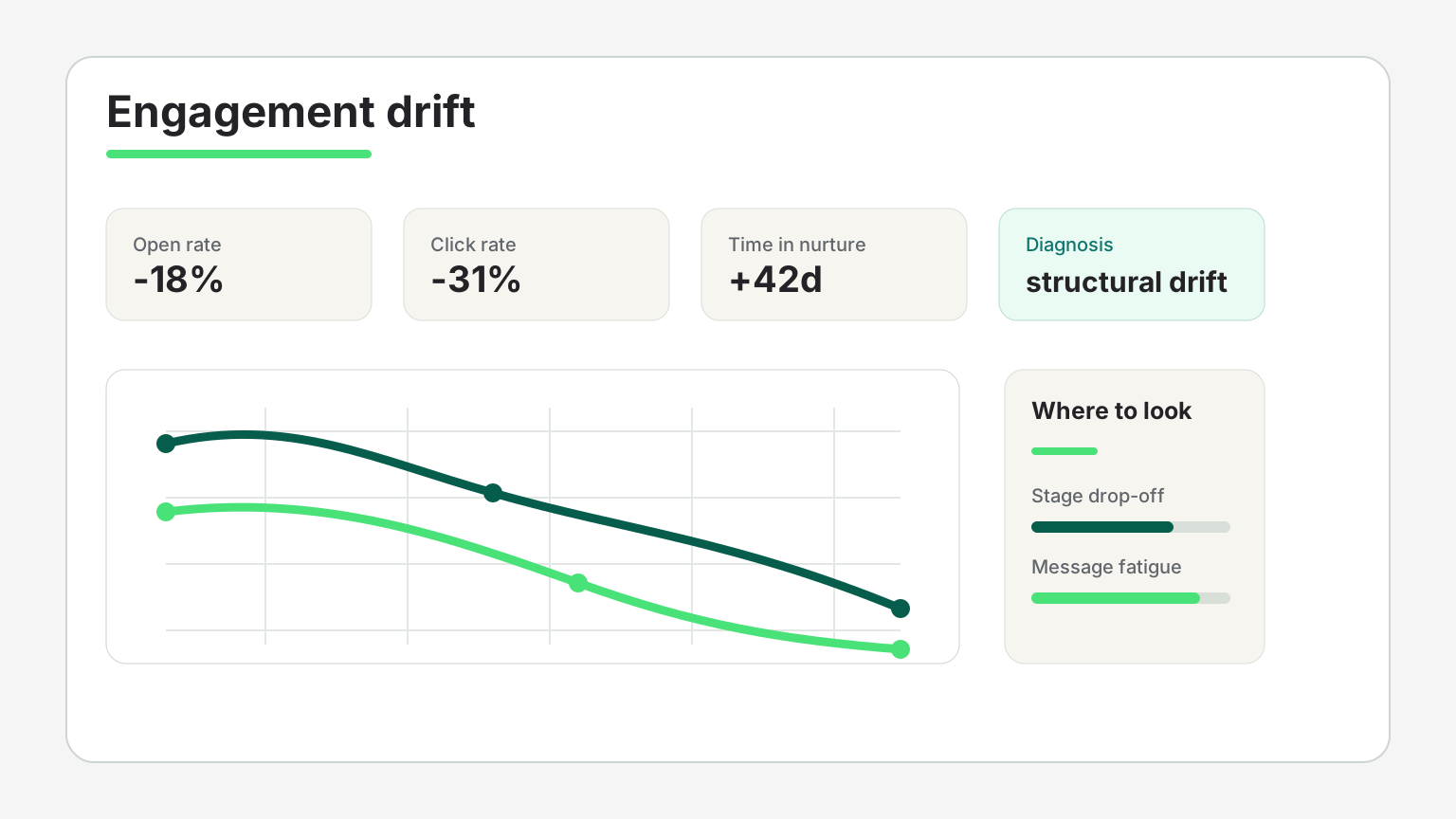
If open rate and click-through rate are trending down quarter after quarter, something has drifted. In Eloqua nurture programs, drift usually comes from misalignment: the content no longer matches intent, segmentation is too broad, or the journey has become bloated with unnecessary steps.
In practical terms, you should look for sharp drop-offs at specific emails or decision points. If one stage has a “cliff edge”, that is where your nurture is failing.
What to do:
- Audit performance by stage, not just by email
- Reduce volume and increase relevance (fewer, better messages)
- Resegment by role, product interest, region, and maturity where possible
- Refresh messaging to match the buyer journey you are actually selling into today
2) Your Program Canvas looks like spaghetti
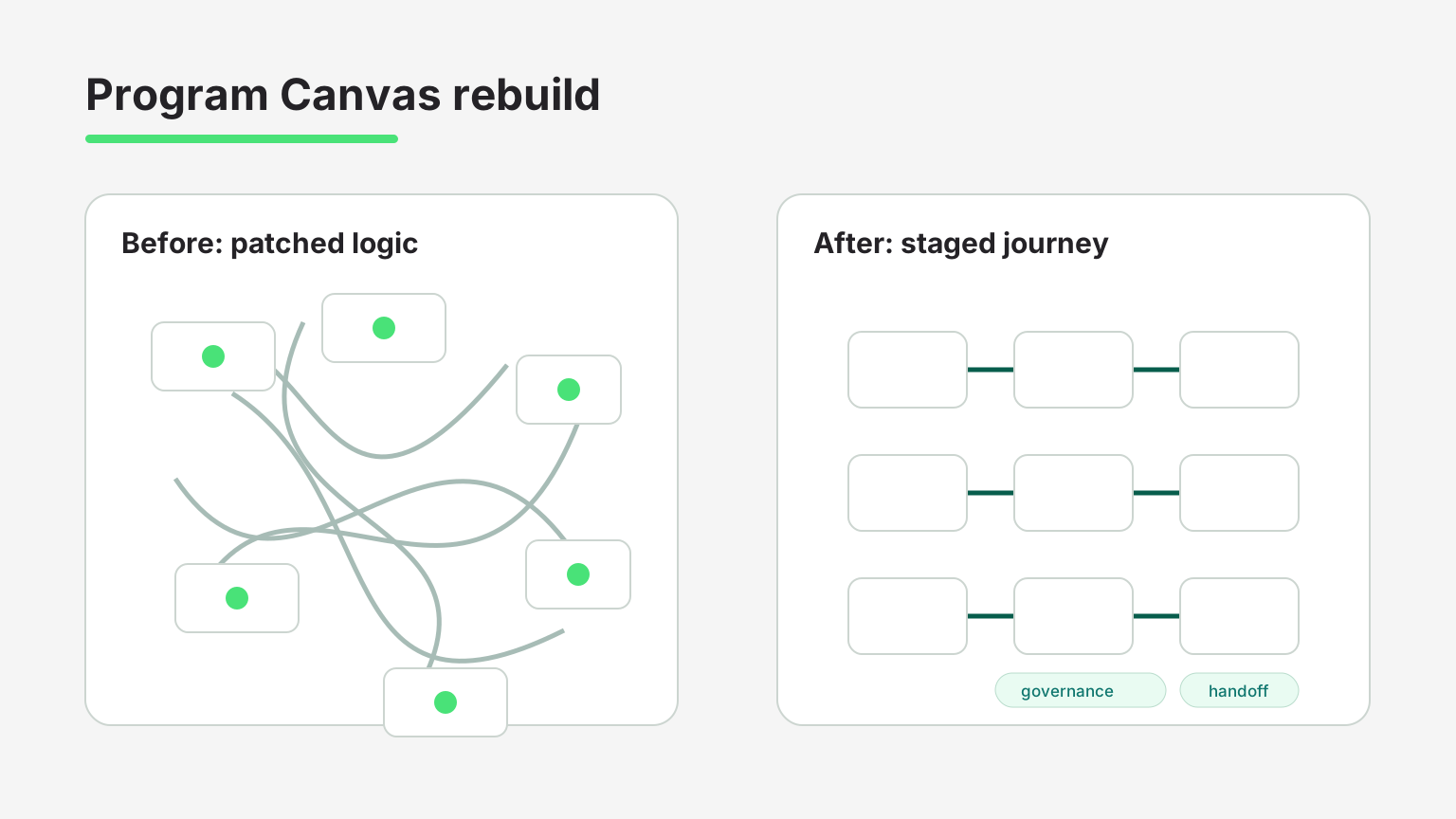
When a nurture has been patched for years, the Eloqua Program Canvas becomes a map of historical decisions rather than a deliberate journey. Multiple owners add exceptions. Sales asks for “just one more branch”. Regions demand special routing. The result is complexity that is hard to test, hard to maintain, and easy to break.
If new team members are afraid to touch the program, that is a clear sign of technical debt. A nurture that cannot be explained cannot be improved.
What to do:
- Refactor into modular stages (Awareness → Consideration → Decision)
- Move complex logic into shared filters/segments where appropriate
- Define entry and exit rules in writing before touching the Canvas
- Cut legacy branches that no longer serve the strategy
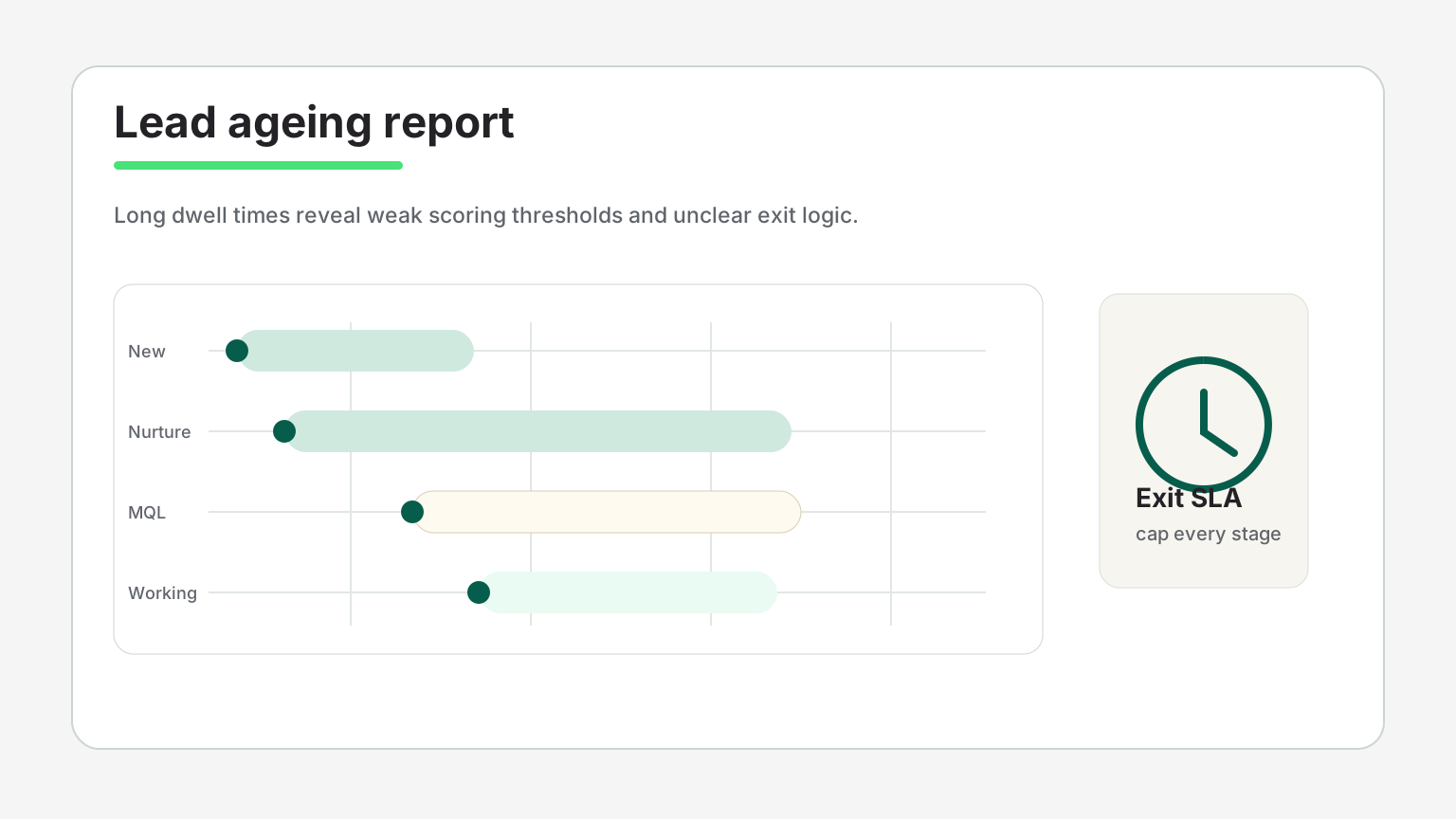
3) Leads are stuck in nurture for too long
“Time in nurture” quietly becomes your biggest problem. If contacts sit in Eloqua nurture for weeks or months without progressing, your scoring model is probably weak, your thresholds are too low or too high, or your exit logic is unclear.
Legacy nurtures often over-rely on email clicks and form fills as buying signals. Modern intent is broader. If your nurture does not incorporate meaningful behavioural cues and clear conversion moments, the journey becomes an endless loop.
What to do:
- Define a maximum time-in-stage and enforce exits
- Recalibrate scoring with stronger intent signals, not vanity engagement
- Add “fast lane” logic for high-intent actions (demo requests, pricing, product comparisons)
- Separate education nurture from qualification nurture if they have different goals
4) Sales no longer trusts your MQLs
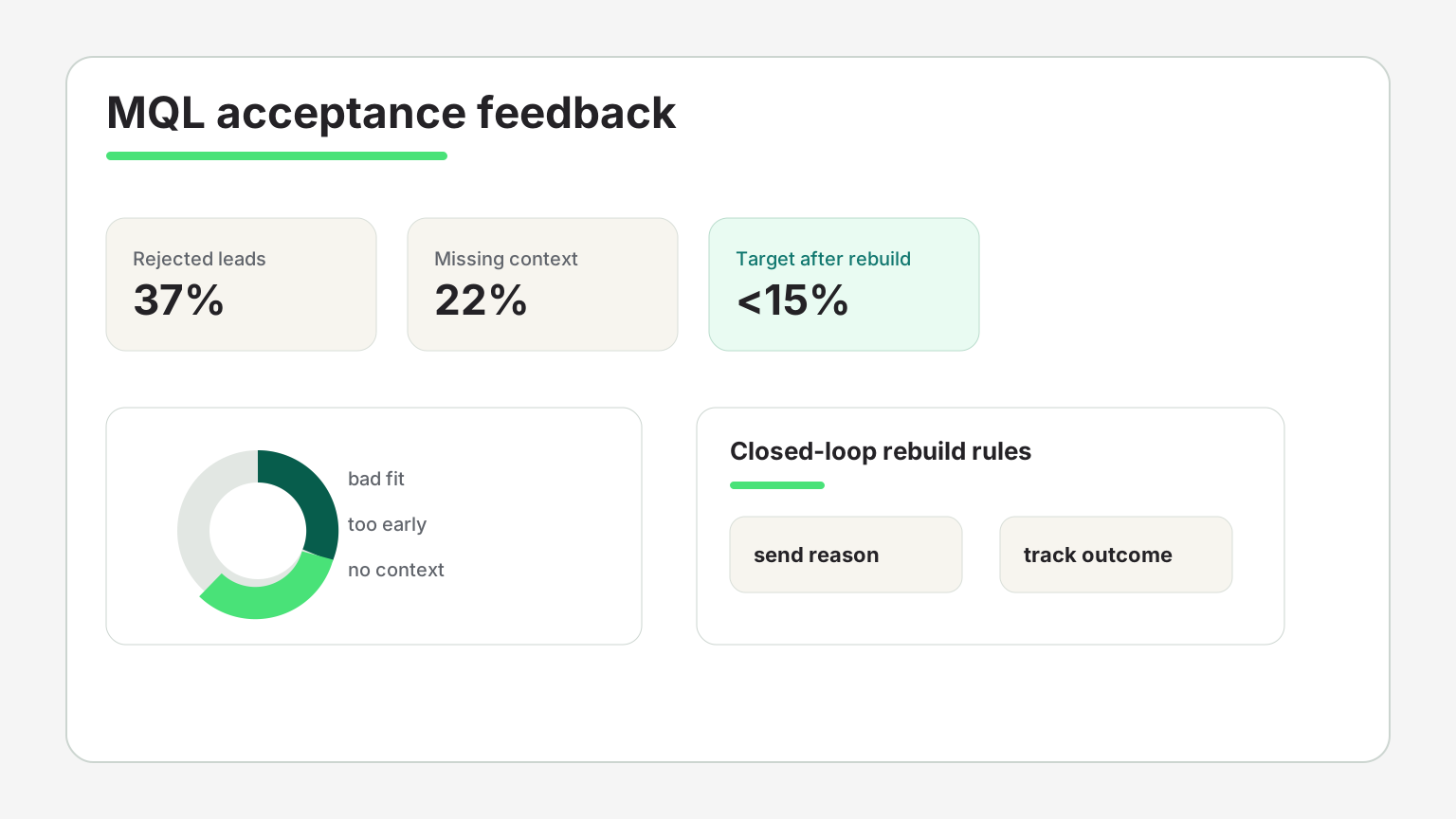
The moment you hear “these leads are not ready”, treat it as a system issue, not a people issue. In Eloqua-SFDC environments, loss of trust usually comes from one or more of these: weak MQL definition, poor data quality, inflated scoring, or unclear routing.
A high-performing Eloqua lead nurture should filter. It should deliver fewer, stronger leads with context that helps Sales act quickly: what the contact engaged with, what product interest was shown, and why they are being sent now.
What to do:
- Align MQL and SAL definitions with Sales and document them
- Send context to Salesforce (interest, last engagement, stage)
- Use feedback loops: track acceptance, rejection reasons and conversion outcomes
- Stop optimising for quantity if it damages pipeline quality
5) Your nurture content no longer matches the buyer journey
Content drift is real. Product names change. Positioning evolves. Competitors move. But the nurture stays frozen. The result is confusion and reduced trust. If your emails tell one story and your website tells another, prospects notice.
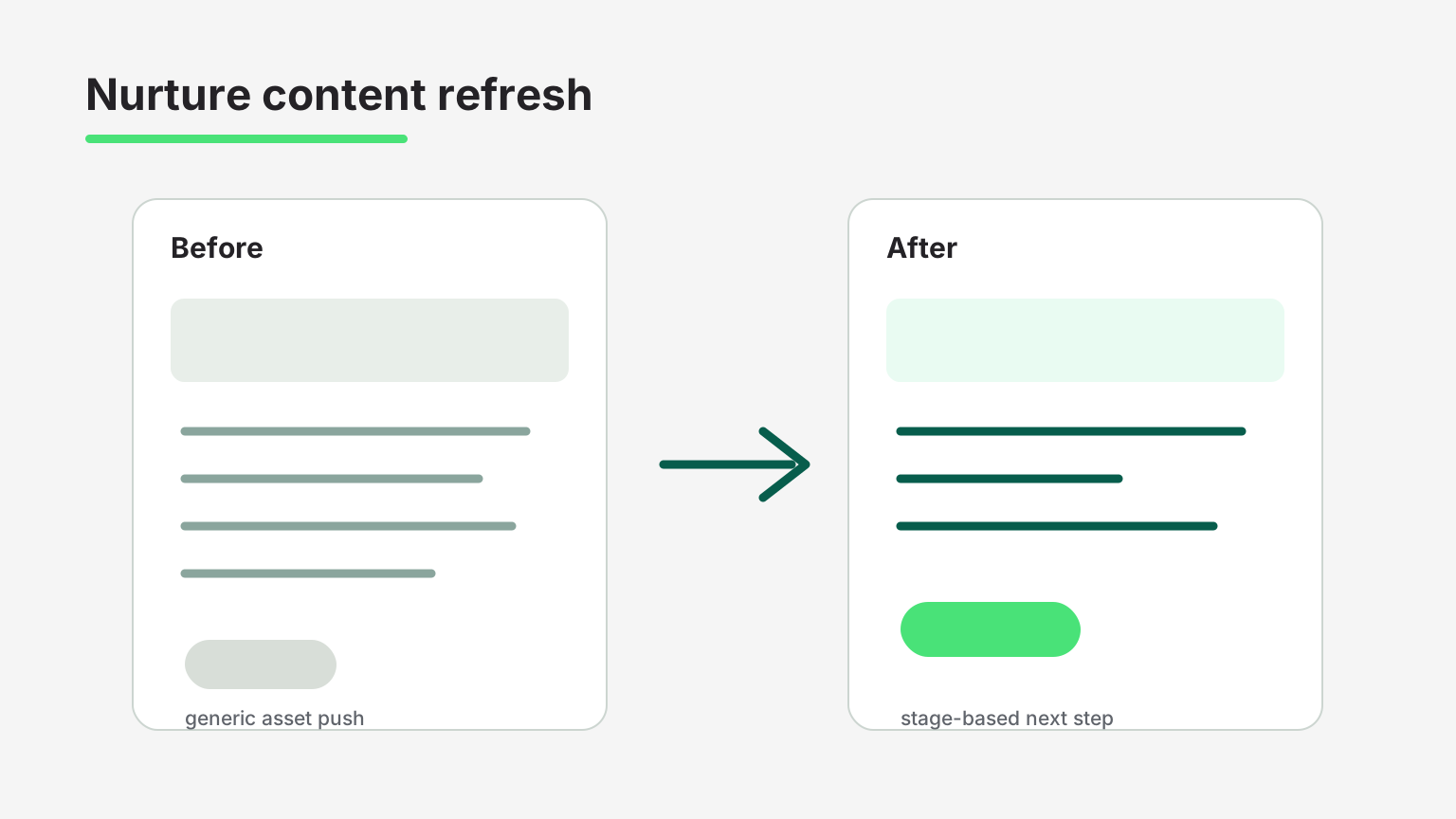
Rebuild your Eloqua nurture content around progressive intent stages. Each stage should earn the next step. If every email is the same “resource dump”, you are nurturing nobody. You are broadcasting.
What to do:
- Map content to intent stages and rewrite gaps
- Use tighter personalisation based on role and product interest
- Remove “random” emails that do not ladder up to the journey
- Build a small number of evergreen assets that genuinely move decisions forward
6) You cannot explain your nurture logic in a few sentences
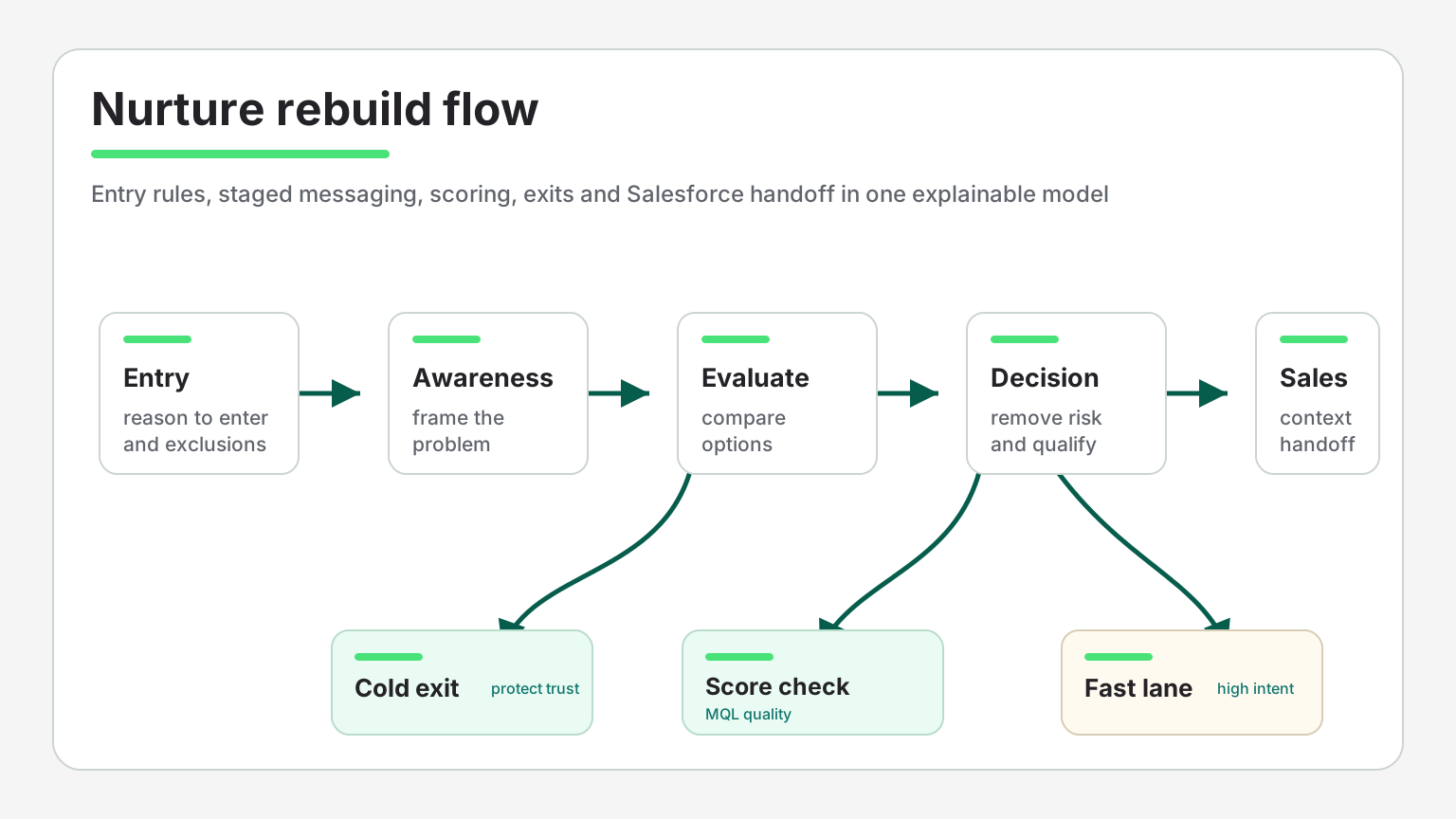
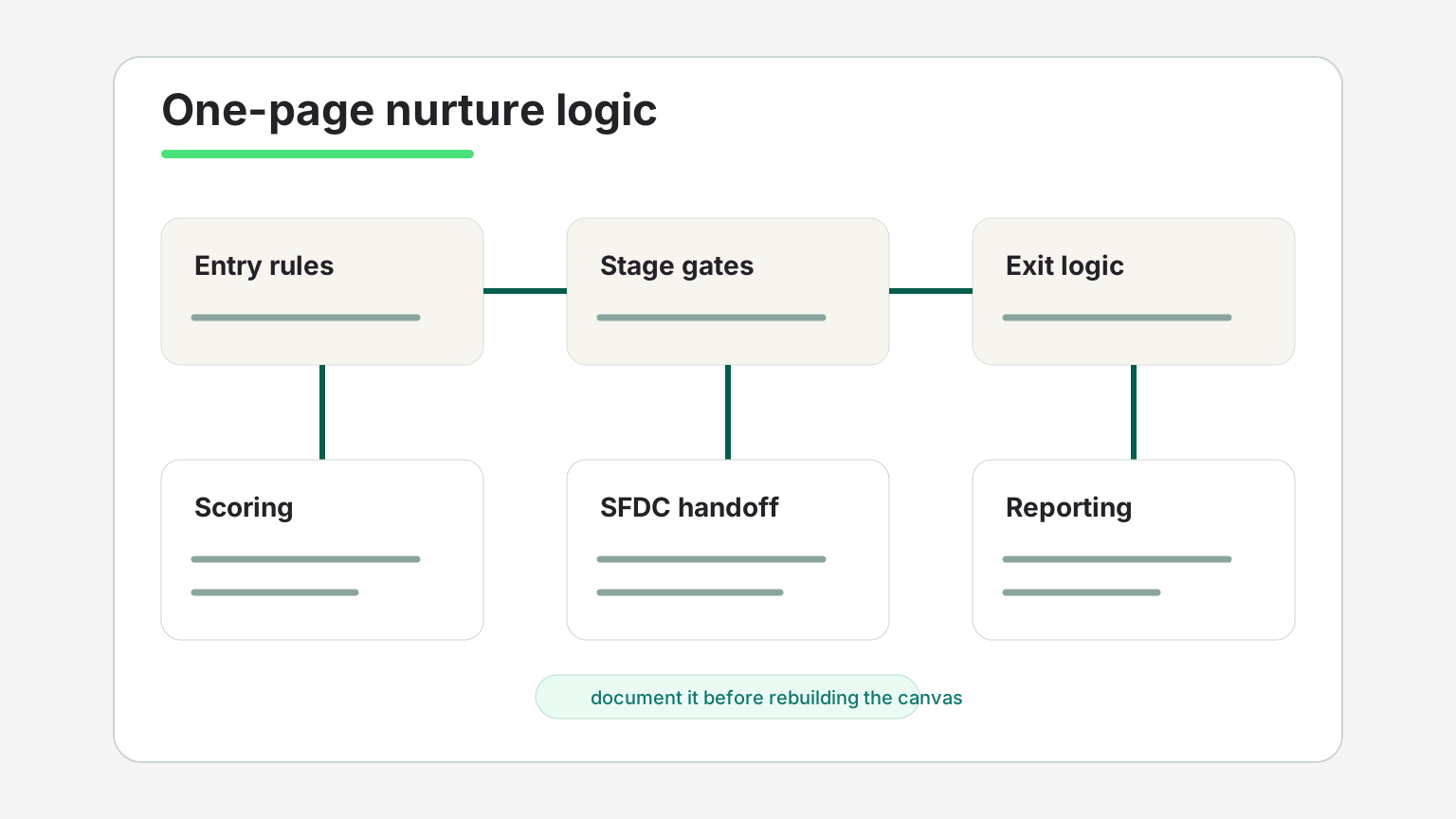
If someone asks “how does our Eloqua nurture work?” and the answer is “it is complicated”, you do not own the system. A nurture should be explainable in plain language: entry criteria, staged content, scoring, and handoff rules.
The rebuild goal is clarity. Clarity makes the program measurable. Clarity makes it maintainable. Clarity is what allows your team to iterate without fear.
What to do:
- Write the logic before you build it (one-page spec)
- Document entry, stage transitions, and exit criteria
- Remove exceptions that exist only because “we always had them”
- Build a single source of truth for the nurture design
7) Data quality is undermining segmentation and routing
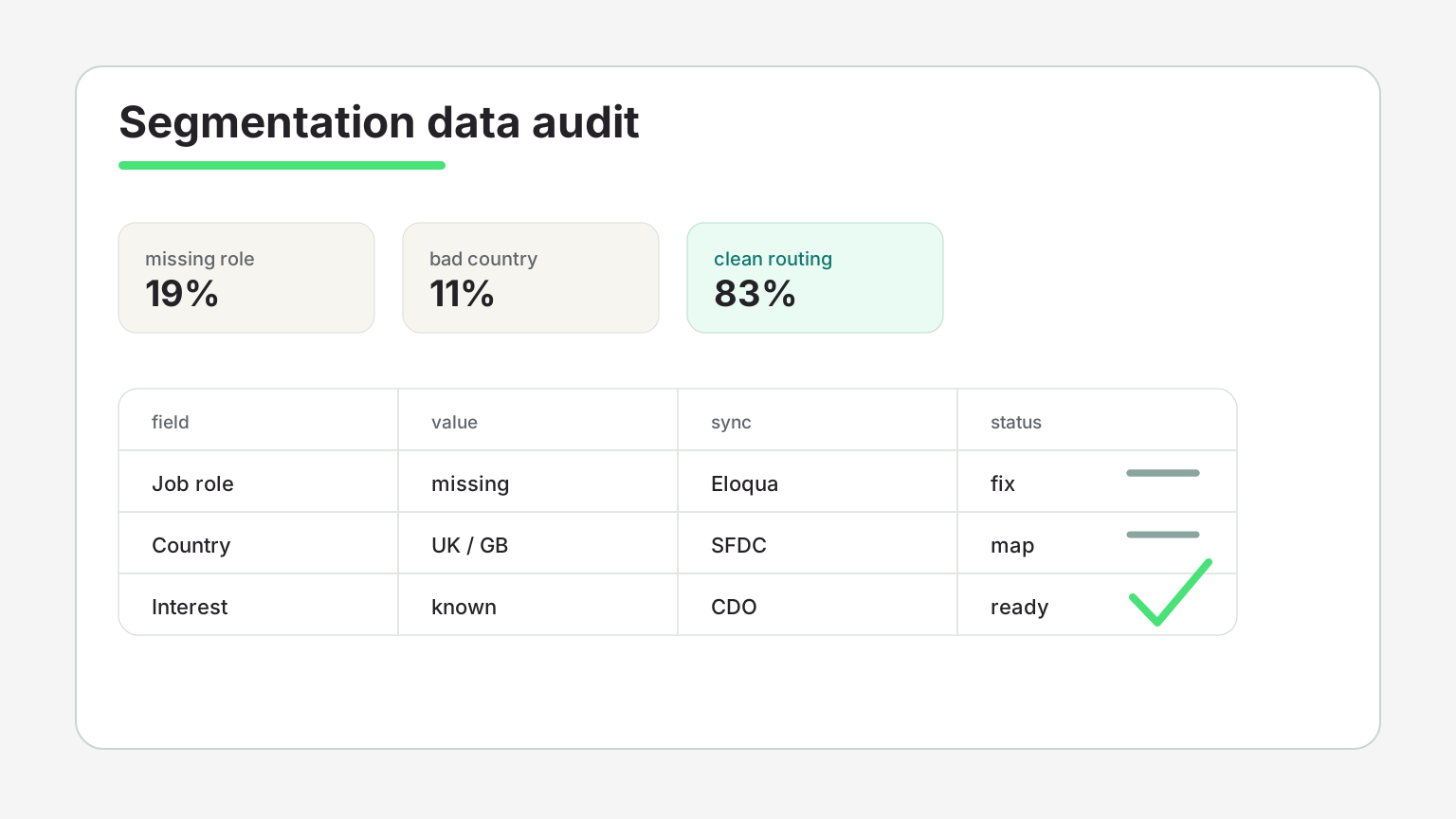
Eloqua segmentation fails when your inputs are unreliable. Missing job titles, inconsistent country values, broken picklists, and mismatched SFDC mappings all lead to irrelevant messaging and incorrect routing. No clever automation can compensate for poor data.
What to do:
- Standardise key fields (country, state, industry, role)
- Audit SFDC mappings and sync rules that affect nurture decisions
- Add progressive profiling to fill critical gaps over time
- Create governance rules so the data stays clean after the rebuild
A practical blueprint for rebuilding an Eloqua lead nurture
If you are going to rebuild, rebuild with intent. The best Eloqua nurtures are not “big”. They are clean, modular, measurable, and aligned with Sales. Here is the pattern that works across enterprise environments.
Rebuild principles
- Modular: design in stages and reusable components
- Intent-driven: score for buying signals, not vanity engagement
- Sales-aligned: shared definitions, clear handoff, measurable feedback loops
- Measurable: KPIs by stage, not just overall email performance
- Scalable: works across regions, languages, and product lines without exploding complexity
A rebuild checklist you can copy
- Define success: what should this nurture produce (MQL rate, SAL rate, pipeline influence)?
- Define entry rules: who enters, from where, and with what minimum data quality?
- Define stages: Awareness, Consideration, Decision. Keep each stage tight.
- Define transitions: what moves a lead forward (behaviour + profile + thresholds)?
- Define exits: MQL handoff, recycling rules, suppression rules, and timeouts.
- Instrument measurement: stage KPIs, funnel reporting, and SFDC feedback loop.
Conclusion
Most Eloqua nurture journeys do not need another round of subject line testing. They need structural clarity: clean stages, stronger segmentation, intent-based scoring, defined exits, and a Salesforce handoff that Sales can trust.
The fastest way to improve performance is usually subtraction. Remove complexity, remove drift, remove outdated branches, and rebuild around a journey you can explain and measure.
If you only take one thing from this article, take this:
A nurture that is easy to understand is easy to improve. A nurture that is messy will stay messy until someone rebuilds it properly.
FAQ
What are the main signs an Eloqua nurture journey needs rebuilding? ⌄
How do I rebuild an Eloqua lead nurture for higher-quality MQLs? ⌄
What should an Eloqua to Salesforce handoff include? ⌄
Want your Eloqua nurture rebuilt properly, not patched forever?
I help enterprise teams rebuild Eloqua lead nurture programs that convert: clean Program Canvas design, intent-based scoring, robust segmentation, and Salesforce handoffs Sales can actually trust. If your nurture is drifting, messy, or underperforming, I can audit it and give you a rebuild plan you can execute.